
Introduction
The way people discover businesses, products, and services has changed significantly with the growth of the internet. Today, customers use search engines, social media, websites, videos, email, and online advertisements before making purchasing decisions.
This is where digital marketing becomes important.
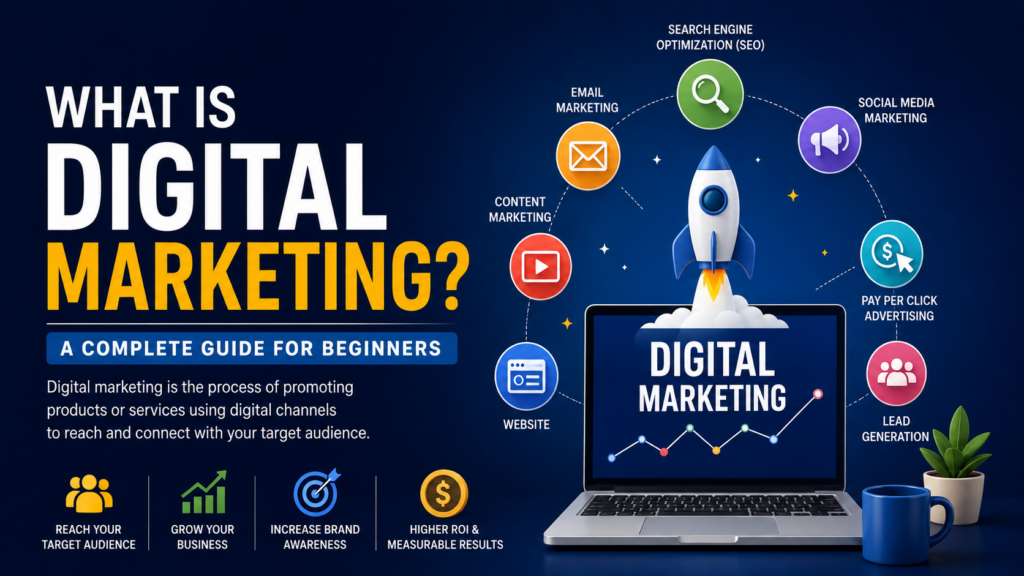
Digital marketing is the process of promoting a business, product, service, or personal brand through digital channels. It helps businesses connect with their target audience, build brand awareness, generate leads, increase website traffic, and achieve their marketing goals.
Whether you are a beginner, small business owner, student, entrepreneur, or marketing professional, understanding digital marketing can help you build a stronger online presence.
In this complete guide, you will learn what digital marketing is, how it works, the different types of digital marketing, its benefits, and how beginners can get started.
What Is Digital Marketing?
Digital marketing is the promotion of products, services, brands, or businesses using digital platforms and online technologies.
Unlike traditional marketing methods such as newspapers, television, radio, and billboards, digital marketing allows businesses to communicate with their audience through channels such as:
- Search engines
- Social media platforms
- Websites
- Online advertisements
- Blogs
- Video platforms
- Mobile applications
For example, when someone searches for a product on Google and discovers a business through its website, that is an example of digital marketing.
Similarly, when a business promotes its services through Instagram, publishes educational blog posts, or sends promotional emails, it is using digital marketing.
Why Is Digital Marketing Important?
The internet has become an important part of everyday life. Customers frequently search online for information, reviews, products, services, and solutions to their problems.
Digital marketing allows businesses to reach these potential customers where they already spend their time.
Some major reasons why digital marketing is important include:
1. Reach Your Target Audience
Digital marketing allows businesses to target specific audiences based on factors such as location, interests, demographics, search behavior, and online activity.
This makes it possible to deliver more relevant marketing messages to potential customers.
2. Increase Brand Awareness
Consistent online marketing can help people discover and recognize your brand.
Social media posts, blogs, videos, SEO, and online advertising can all contribute to increasing brand visibility.
3. Generate Leads
Digital marketing can help businesses attract potential customers and convert them into leads.
Websites, landing pages, contact forms, social media campaigns, and email marketing can all be used for lead generation.
4. Increase Website Traffic
SEO, content marketing, social media, and paid advertising can help bring visitors to your website.
More relevant traffic can create opportunities to generate leads, sales, and inquiries.
5. Measure Marketing Performance
One of the biggest advantages of digital marketing is that businesses can track their results.
Marketers can analyze metrics such as:
- Website visitors
- Clicks
- Impressions
- Engagement
- Leads
- Conversions
- Conversion rate
- Advertising costs
This information helps businesses understand what is working and where improvements are needed.
How Does Digital Marketing Work?
Digital marketing generally works by attracting potential customers, engaging them with useful information, and encouraging them to take an action.
A simple digital marketing process can be divided into five stages:
1. Awareness
First, people discover your business through search engines, social media, advertisements, videos, or other digital channels.
2. Interest
After discovering your business, users may visit your website, read your blog, watch your videos, or explore your social media profiles.
3. Consideration
Potential customers compare your products or services with other options and look for information that helps them make a decision.
4. Conversion
The customer takes a desired action, such as making a purchase, filling out a form, booking a service, or contacting your business.
5. Retention
After the conversion, businesses can use email marketing, social media, customer service, and valuable content to maintain relationships with customers.
Types of Digital Marketing
Digital marketing includes several different strategies. Businesses can choose the channels that best match their audience and goals.
1. Search Engine Optimization (SEO)
Search Engine Optimization (SEO) is the process of improving a website and its content to increase its visibility in search engine results.
SEO can help businesses attract organic traffic without paying for every individual website visit.
Important areas of SEO include:
- Keyword research
- On-page SEO
- Technical SEO
- Content optimization
- Internal linking
- Website speed
- Mobile optimization
- Off-page SEO
For example, a digital marketing website can publish a useful article targeting the search query “digital marketing for beginners.” If the content satisfies the user’s search intent and performs well in search results, it can attract relevant visitors.
2. Social Media Marketing
Social media marketing involves promoting a brand or business through social media platforms.
Businesses can use social media to:
- Build brand awareness
- Share educational content
- Promote products and services
- Engage with customers
- Generate leads
- Build communities
Short-form videos, images, carousels, stories, and educational posts are commonly used in social media marketing.
3. Content Marketing
Content marketing focuses on creating useful and relevant content for a specific audience.
Examples include:
- Blog posts
- Videos
- Guides
- Infographics
- Case studies
- Social media content
- E-books
Good content can answer customer questions, demonstrate expertise, build trust, and attract visitors to a website.
4. Pay-Per-Click Advertising (PPC)
Pay-Per-Click advertising is a form of online advertising where advertisers generally pay when someone clicks on their advertisement.
PPC can be used on search engines and various digital platforms.
For example, a business selling web design services can create an advertisement targeting people searching for web design services.
PPC can provide targeted traffic quickly, but campaigns need proper keyword research, audience targeting, budgeting, and optimization.
5. Email Marketing
Email marketing allows businesses to communicate directly with subscribers and customers.
Businesses can use email campaigns to:
- Share newsletters
- Promote products
- Send special offers
- Nurture leads
- Share educational content
- Maintain customer relationships
Effective email marketing focuses on providing useful information rather than sending unnecessary promotional messages.
6. Influencer Marketing
Influencer marketing involves collaborating with creators who have an established audience in a particular niche.
For example, a fitness company may collaborate with a fitness creator to promote a product to an audience interested in fitness.
The most effective influencer campaigns focus on audience relevance and authenticity rather than simply choosing influencers with large follower counts.
Benefits of Digital Marketing
Digital marketing offers several benefits for businesses and personal brands.
Cost-Effective Marketing
Businesses can choose strategies based on their available budget. Organic methods such as SEO and content marketing can complement paid advertising.
Global Reach
A website and social media presence can allow a business to reach customers beyond its local market.
Better Audience Targeting
Digital advertising platforms can provide detailed targeting options, allowing businesses to reach specific audiences.
Higher Engagement
Social media, email, videos, and interactive content allow businesses to communicate directly with their audience.
Measurable Results
Digital marketing provides data that can be used to evaluate campaigns and make better marketing decisions.
Personalized Marketing
Businesses can create different messages and experiences based on customer interests, behavior, and preferences.
Digital Marketing vs Traditional Marketing
Traditional marketing includes channels such as television, radio, newspapers, magazines, and billboards.
Digital marketing uses online channels such as search engines, websites, social media, email, and digital advertising.
One major difference is measurement and targeting. Digital platforms generally provide more detailed data about audience interactions and campaign performance.
However, traditional and digital marketing do not always need to compete with each other. Businesses can combine both approaches depending on their goals and target audience.
How to Start Digital Marketing as a Beginner
If you are new to digital marketing, you do not need to learn everything at once.
Follow a structured approach.
Step 1: Learn the Fundamentals
Start by understanding basic concepts such as:
- SEO
- Social media marketing
- Content marketing
- Email marketing
- PPC
- Analytics
- Branding
Step 2: Choose a Specialization
After learning the basics, consider focusing on an area that interests you.
For example:
- SEO specialist
- Social media marketer
- Content marketer
- Performance marketer
- Email marketer
- Digital marketing strategist
Step 3: Build Your Own Website
Creating a website gives you a place to practice SEO, content creation, branding, analytics, and other digital marketing skills.
Step 4: Create Content
Start publishing useful content related to your niche.
You can create:
- Blog posts
- Instagram posts
- Reels
- YouTube videos
- Infographics
Step 5: Practice SEO
Learn how to conduct keyword research, create search-friendly content, optimize pages, improve website structure, and understand search intent.
Step 6: Track Your Results
Use analytics tools to understand website traffic, engagement, conversions, and other important performance metrics.
Step 7: Keep Learning
Digital marketing changes continuously. Search algorithms, social media platforms, advertising technologies, and consumer behavior can change over time.
Continuous learning is therefore an important part of becoming a successful digital marketer.
Common Digital Marketing Mistakes
Beginners often make several mistakes when starting their online marketing journey.
Focusing Only on Promotion
People do not want to see advertisements all the time. Educational and helpful content can be more effective for building trust.
Ignoring SEO
A website can look attractive but still receive little organic traffic if it is not properly optimized for search engines.
Trying Every Platform
Being active on every social media platform is not necessary. Focus on platforms where your target audience is most active.
Not Tracking Results
Without analytics, it becomes difficult to understand whether your marketing activities are generating meaningful results.
Expecting Immediate Results
Some digital marketing strategies, particularly SEO and content marketing, can take time to produce significant results. Consistency and continuous optimization are important.
Future of Digital Marketing
The digital marketing industry continues to evolve as technology and customer behavior change.
Artificial intelligence, automation, video content, personalization, data analytics, and new forms of online communication are influencing modern marketing.
However, successful digital marketing will continue to depend on a few fundamental principles:
- Understand your audience
- Create valuable content
- Build trust
- Provide a good user experience
- Measure performance
- Adapt to changes
Businesses that combine technology with a strong understanding of their customers can create more effective marketing strategies.
Conclusion
Digital marketing is an essential part of modern business growth. It allows businesses, entrepreneurs, and personal brands to reach their target audience through search engines, social media, websites, email, content, and online advertising.
For beginners, the best approach is to understand the fundamentals first and then develop practical skills through real projects.
Whether your goal is to increase website traffic, generate leads, build brand awareness, or grow an online business, digital marketing provides a wide range of strategies to help you achieve your objectives.
Start by learning the basics, choose the right digital marketing channels, create valuable content, optimize your website for search engines, and consistently analyze your results.
The more you practice, test, and learn, the stronger your digital marketing skills will become.